Common Skin Conditions: How to Recognize & Treat Them
From bacterial infections to allergic reactions, skin conditions are among the most frequent reasons Americans visit urgent care. Learn to identify what you're dealing with — and what treatments actually work.
Medical Disclaimer: The information below is for educational purposes only. Always consult a licensed physician before starting any treatment. Images shown are real clinical photographs for identification purposes.
Skin is the body's largest organ — and one of the most visible indicators of internal and external health. Despite this, skin conditions are often undertreated or misidentified at home, leading to unnecessary urgent care visits that could be avoided with the right knowledge and medications on hand.
Below, our medical team breaks down 6 of the most common skin conditions seen in urgent care, with real clinical photos to help you recognize them, understand their causes, and know your treatment options.

Clinical photo: Impetigo
Impetigo
A highly contagious bacterial skin infection causing red sores that quickly rupture, ooze for a few days, and then form a yellowish-brown crust. Most common in children but can affect adults.
Common Symptoms:
- Honey-colored crusted sores
- Red sores around nose and mouth
- Fluid-filled blisters
- Itching and soreness
Treatment:
Topical or oral antibiotics (e.g., mupirocin ointment, cephalexin, or amoxicillin/clavulanate for severe cases).
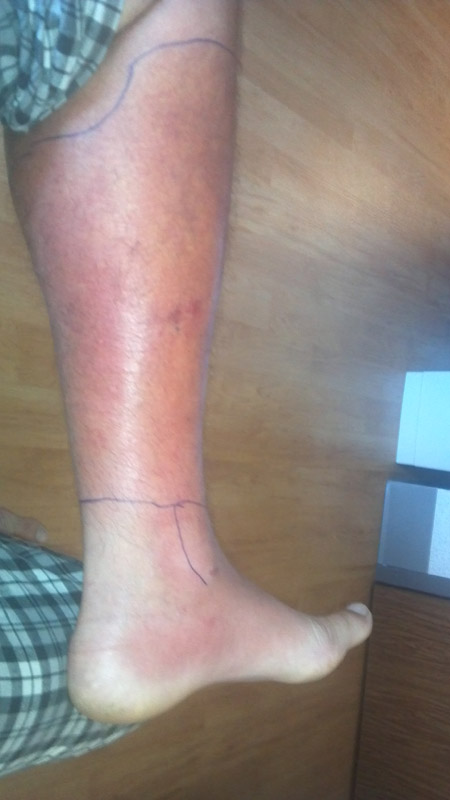
Clinical photo: Cellulitis
Cellulitis
A serious bacterial skin infection that appears as a swollen, red area that feels hot and tender. It can spread rapidly and reach the lymph nodes and bloodstream.
Common Symptoms:
- Red, swollen, warm skin
- Spreading redness
- Fever and chills
- Skin that looks pitted like orange peel
Treatment:
Oral antibiotics (cephalexin, amoxicillin/clavulanate). Severe cases require IV antibiotics in hospital.
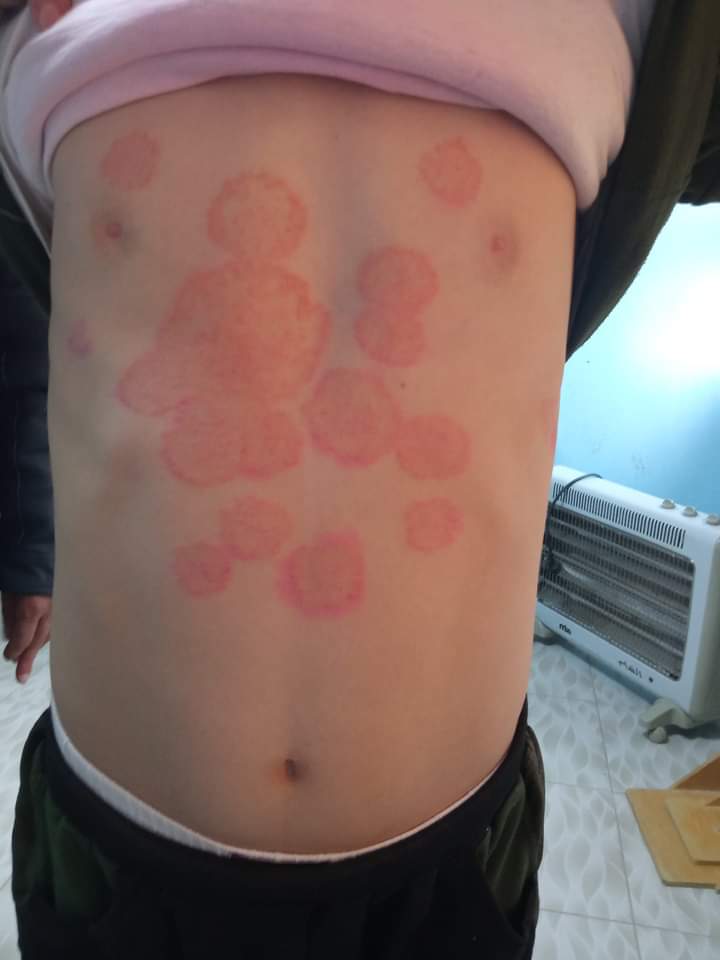
Clinical photo: Ringworm (Tinea Corporis)
Ringworm (Tinea Corporis)
Despite the name, ringworm is a fungal infection — not caused by a worm. It produces a ring-shaped, scaly rash on the skin and is spread by direct contact.
Common Symptoms:
- Ring-shaped rash with clear center
- Scaly, red outer edges
- Itching
- Slowly expanding patches
Treatment:
Topical antifungal creams (clotrimazole, terbinafine). Oral antifungals for stubborn or widespread cases.
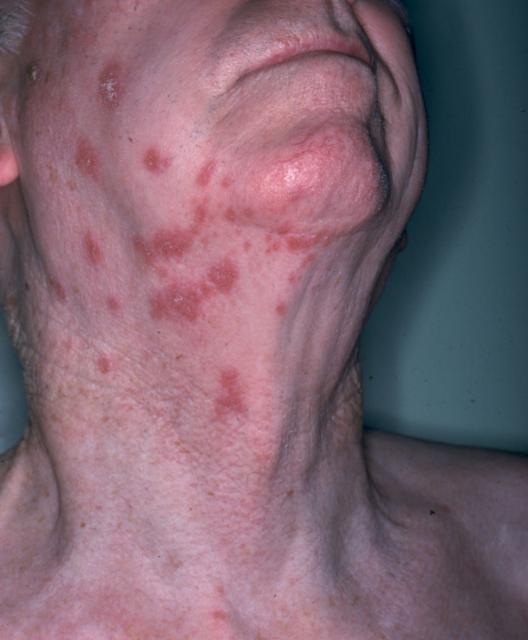
Clinical photo: Shingles (Herpes Zoster)
Shingles (Herpes Zoster)
Caused by the reactivation of the varicella-zoster virus (the same virus that causes chickenpox). Produces a painful, blistering rash typically appearing as a stripe of blisters that wraps around one side of the torso.
Common Symptoms:
- Burning or tingling pain
- Sensitivity to touch
- Red rash appearing days after pain
- Fluid-filled blisters that break open
Treatment:
Antiviral medications (acyclovir, valacyclovir) are most effective when started within 72 hours of rash onset.

Clinical photo: Eczema (Atopic Dermatitis)
Eczema (Atopic Dermatitis)
A chronic inflammatory skin condition causing dry, itchy, and inflamed skin. It often flares periodically, then subsides. Common in children but occurs in adults as well.
Common Symptoms:
- Dry, sensitive skin
- Intense itching
- Red to brownish-gray patches
- Small, raised bumps that may weep fluid
Treatment:
Corticosteroid creams (hydrocortisone, methylprednisolone for flares), moisturizers, antihistamines for itch relief.

Clinical photo: Urticaria (Hives)
Urticaria (Hives)
Raised, itchy welts on the skin triggered by an allergic reaction, infection, stress, or unknown causes. They can appear anywhere on the body and vary in size.
Common Symptoms:
- Raised, itchy red or skin-colored welts
- Welts that change shape or move
- Swelling in the affected area
- Symptoms that worsen with heat or stress
Treatment:
Antihistamines (cetirizine, diphenhydramine). Severe cases with throat swelling require epinephrine and emergency care.
Key Takeaway: Preparedness Prevents Panic
Many of the treatments for common skin conditions — antibiotics for bacterial infections, corticosteroids for inflammation, antihistamines for allergic reactions — overlap with what's already included in RemedyNowRX medication packs.
Instead of rushing to urgent care at 9pm for a spreading rash or a suspected cellulitis, having the right medications already on hand — reviewed and approved by a physician — means you can respond quickly and appropriately.

